
3 Meteor Showers Will Light Up The Night Soon: Here’s When And Where To Watch
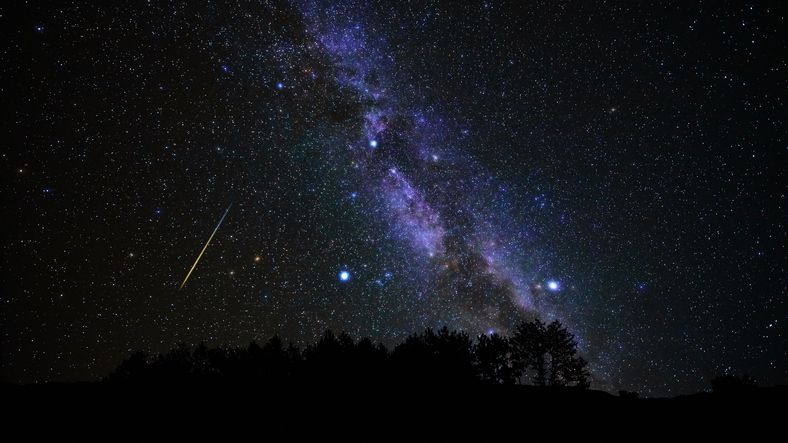
Skywatchers are in for a treat this week as three meteor showers will be active across the night sky this week and earlier next month: the Alpha Capricornids, the Southern Delta Aquariids and the Perseids. But when can you see them, and which shower will offer the best viewing? Here’s what you need to know.
Two meteor showers will reach their peak this week.
According to Florida Today and the American Meteor Society, two meteor showers will reach their peak this week, but there are actually three active meteor showers lighting up the skies. The Southern Delta Aquariids are active through Aug. 23 and will peak July 30-31, 2026, when the moon will be 98% full. The Alpha Capricornids are active through Aug. 15 and will also peak July 30-31 under the same bright moon. Meanwhile, the Perseids are active through Aug. 24 and will peak on the night of Aug. 12 into the early morning of Aug. 13, when the moon will be completely new, creating ideal viewing conditions.
Unfortunately, the Alpha Capricornids and Southern Delta Aquariids will peak just after July’s full moon on July 29. As Florida Today noted, the bright moonlight will wash out all but the brightest meteors, making the two showers much more difficult to see.
The Perseids will be one “of the most prolific meteor showers of the year,” according to experts.
Thankfully, the Perseids won’t face the same challenge. Space describes the Perseids as “one of the most prolific meteor showers of the year,” and this year’s peak comes during a new moon, meaning moonlight won’t interfere with viewing. The shower is active from mid-July through late August and will reach its peak on the night of Aug. 12 before dawn on Aug. 13, 2026. Viewers should begin watching around 11 p.m. local time, when meteor activity starts increasing, and continue observing until dawn for the best chance of seeing shooting stars. Some lucky viewers watching the Aug. 12 total solar eclipse may even spot a few Perseids during totality. Although the Perseids return every year, astronomers are already looking ahead to the possibility of a Perseid meteor storm in 2028.
According to Space, viewers can expect to see up to 100 meteors per hour during the Perseids’ peak under ideal viewing conditions. The meteor shower occurs because Earth passes through a stream of icy and rocky debris left behind by Comet Swift-Tuttle, which last passed near Earth in 1992. The shower reaches its peak each year when Earth travels through the densest part of that debris field, usually between Aug. 11 and Aug. 13.
How do you see all three meteor showers?
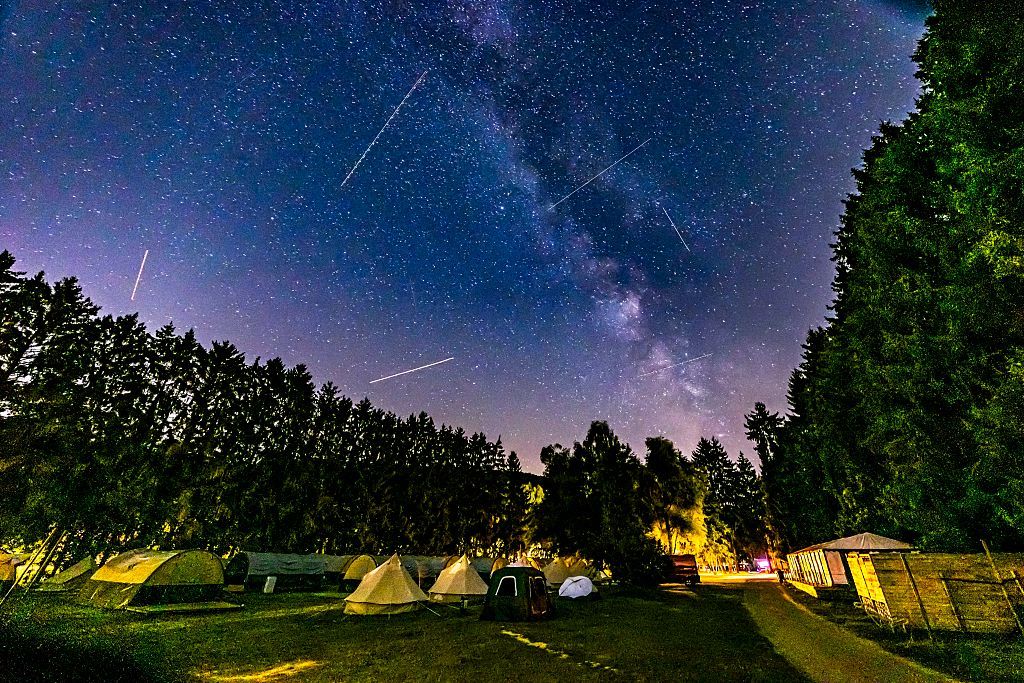
If you’re hoping to catch any of this week’s meteor showers or the upcoming Perseid meteor shower, the American Meteor Society says, “All these showers are best seen after midnight.” The organization also notes, “Some are not even visible until after midnight. Showers that peak with the moon’s phase greater than one half illuminated (first quarter to last quarter) will be affected by moonlight and difficult to observe.”
For the best viewing experience, head to a dark location away from city lights, allow your eyes about 20 to 30 minutes to adjust to the darkness, and be patient. The darker the sky, the better your chances of seeing meteors streak overhead.
SEE MORE:
View From Space: Artemis II Photos Show Earth Like You’ve Never Seen It Before
The Historic Career Of Max Robinson: The First Black News Anchor


Post a Comment
0 Comments